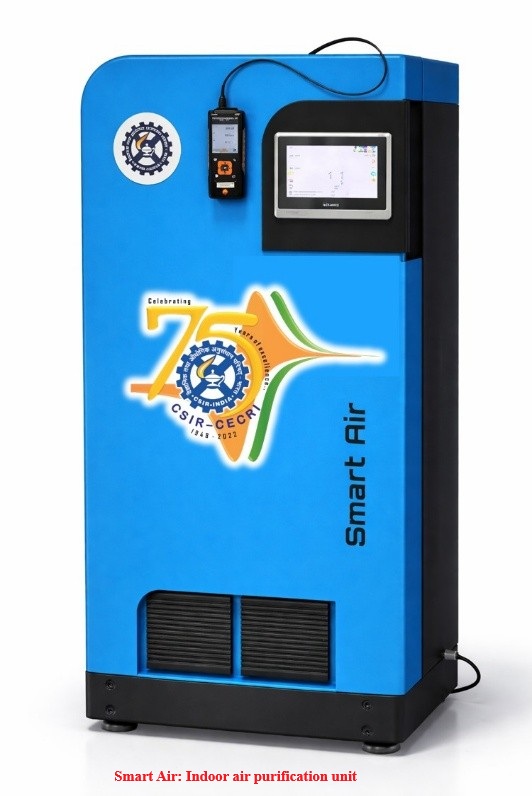
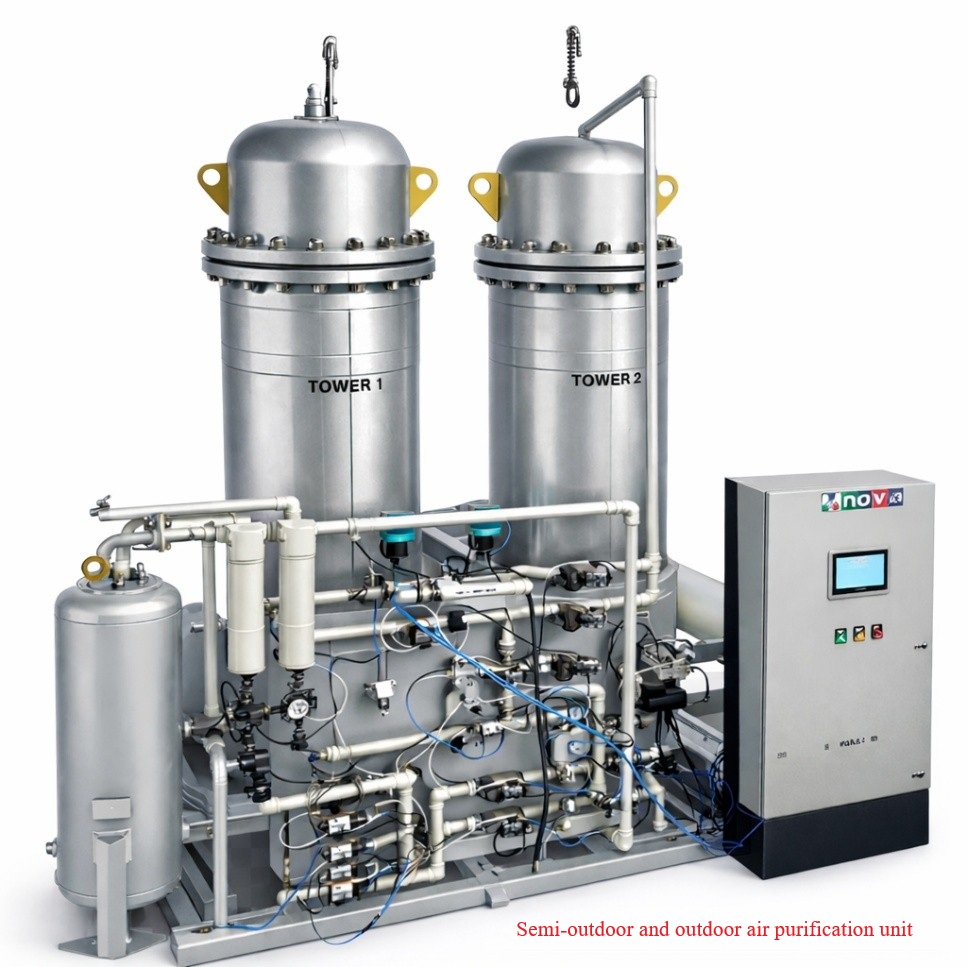
Technology Profile
| Title: | CO2 Capture from Indoor, Semi-indoor and Outdoor air |
| Value Proposition: | The continuous rise in atmospheric CO₂ is a major contributor to climate change. Outdoor Direct Air Capture (DAC) technologies are recognized as negative emission solutions that can remove already emitted CO₂ from the atmosphere, helping our country to achieve net-zero targets outlined in international climate frameworks. Beyond outdoor applications, managing CO₂ levels in indoor and semi-indoor environments has become important. According to indoor air quality recommendations by the World Health Organization and ventilation guidelines from ASHRAE, CO₂ concentration in indoor spaces should ideally remain below ~800-1000 ppm to ensure good air quality. In enclosed environments such as offices, classrooms, hospitals, shopping malls, and transportation hubs, human respiration and limited ventilation can rapidly increase CO₂ levels, particularly in high-footfall or poorly ventilated areas. Elevated CO₂ concentrations in indoor environments can lead to headaches, fatigue, reduced cognitive performance, dizziness, and decreased productivity, affecting learning, workplace efficiency, and sick building syndrome, affecting overall occupant well-being. Semi-indoor locations such as bus terminals, railway stations, airport waiting areas, and covered markets can also experience localized CO₂ accumulation due to crowd density and restricted air circulation. The proposed technology employs high-performance porous adsorbents capable of capturing CO₂ even at low atmospheric concentrations, making it suitable for both outdoor direct air capture and indoor air quality management. With its low energy requirements, rapid adsorption–desorption kinetics, and reusable adsorbents, the system offers a cost-effective, modular, and scalable solution that can be integrated with existing ventilation or air-handling systems. This makes it attractive for industries, urban infrastructure managers, commercial buildings, and public institutions seeking to improve air quality while contributing to climate change mitigation and carbon reduction goals. |
| Summary Application: | The developed CO₂ capture technology can be applied for direct air capture (DAC) from outdoor environments to remove atmospheric CO₂ and support climate change mitigation. It can also be used in indoor and semi-indoor spaces such as offices, classrooms, hospitals, shopping malls, and transportation hubs to control CO₂ levels and improve air quality in crowded or poorly ventilated areas. The modular and scalable system can be integrated with ventilation and air-handling units, making it suitable for commercial buildings, public infrastructure, and industrial facilities seeking sustainable carbon management and healthier indoor environments. |
| Advantages: |
|
| Tech. Readiness Level: |

: director[at]cecri[dot]res[dot]in
:91-4565-227777
:https://www.cecri.res.in