Technology Profile
| Title: | Dynamic Power Window |
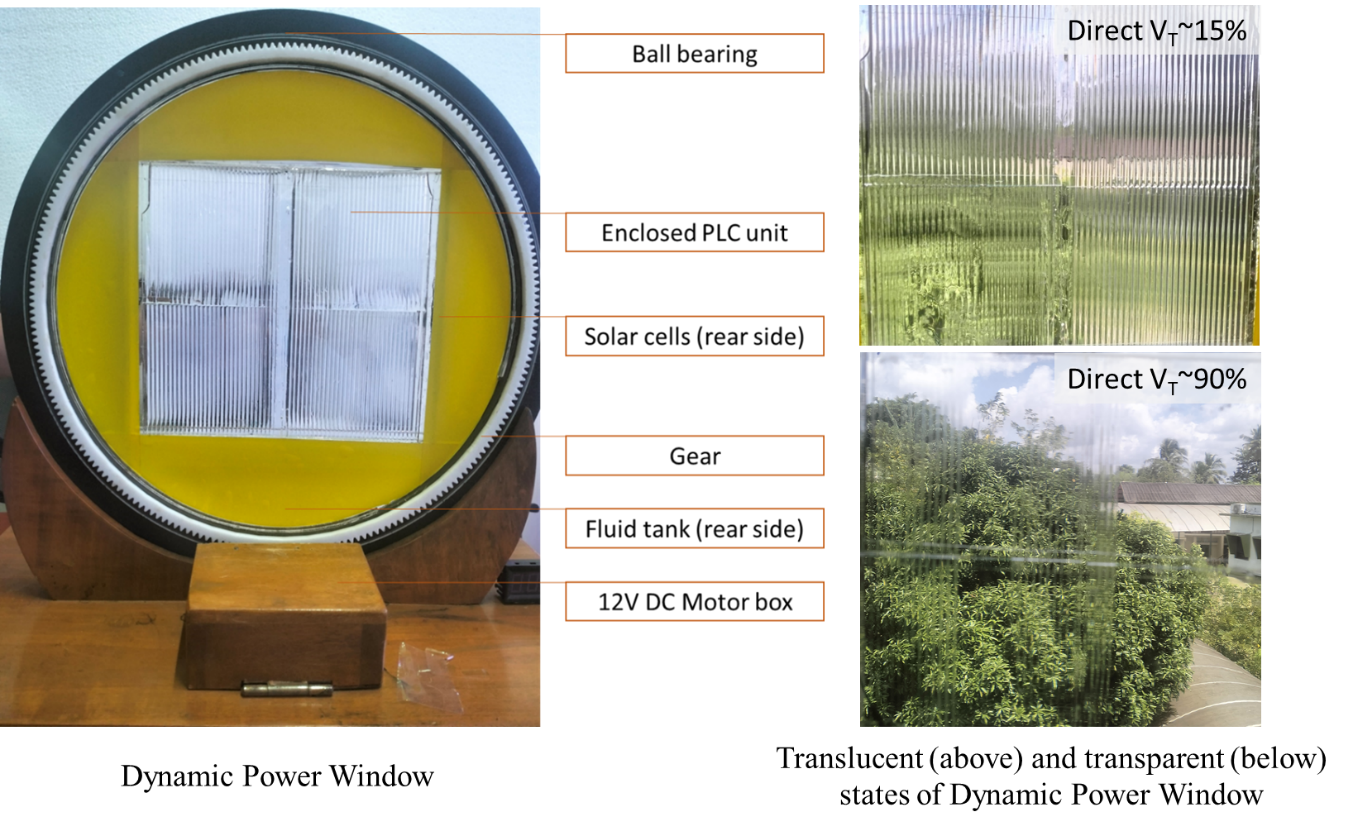
| Value Proposition: | The Dynamic Power Window (DPW) represents an innovative Building Integrated Photovoltaics (BIPV) technology, delivering a unified solution that simultaneously addresses energy generation, energy efficiency, and occupant comfort, which were fragmented as separate technologies. Current BIPV systems are largely limited to rooftops due to their opaque nature, while dynamic windows lack energy generation capability. At its core, DPW solves a critical gap in the market: the absence of a multifunctional glazing solution that can both generate electricity and dynamically manage light transmission. DPW overcomes these limitations through a novel combination of planar light concentrator (PLC) optics and optical coupling fluids. From an economic standpoint, DPW offers a compelling value proposition by reducing both capital and operational costs. The system minimizes the required photovoltaic material through optical concentration (~5×), lowering module costs while maintaining performance. Simultaneously, it reduces building energy consumption by controlling daylight and heat ingress, leading to shorter payback periods compared to standalone PV or smart glass solutions. From a sustainability perspective, DPW accelerates the transition toward net-zero and energy-positive buildings. By decentralizing energy generation at the building envelope, it also reduces transmission losses and reliance on centralized power systems. |
| Summary Application: | The primary applications of DPW include commercial buildings, high-rise façades, residential complexes, skylights, and institutional infrastructure, where both energy efficiency and occupant comfort are critical. It is particularly valuable in urban environments where rooftop solar capacity is limited, enabling vertical surfaces to contribute to decentralized energy production. Additionally, DPW supports green building certifications by enhancing daylighting, reducing cooling loads, and improving overall energy performance. Beyond buildings, the technology has potential applications in automotive glazing, greenhouses, and smart infrastructure, where dynamic light control and energy harvesting are beneficial. Overall, DPW offers a scalable and multifunctional solution that aligns with global trends toward net-zero buildings and sustainable urban development. |
| Advantages: |
|
| Tech. Readiness Level: |

: director[at]niist[dot]res[dot]in
:91-471- 2515226
:https://www.niist.res.in