Technology Profile
| Title: | Floating Platform for Hybrid Offshore Horizontal Axis Wind Turbine (HAWT) and Solar Farm |
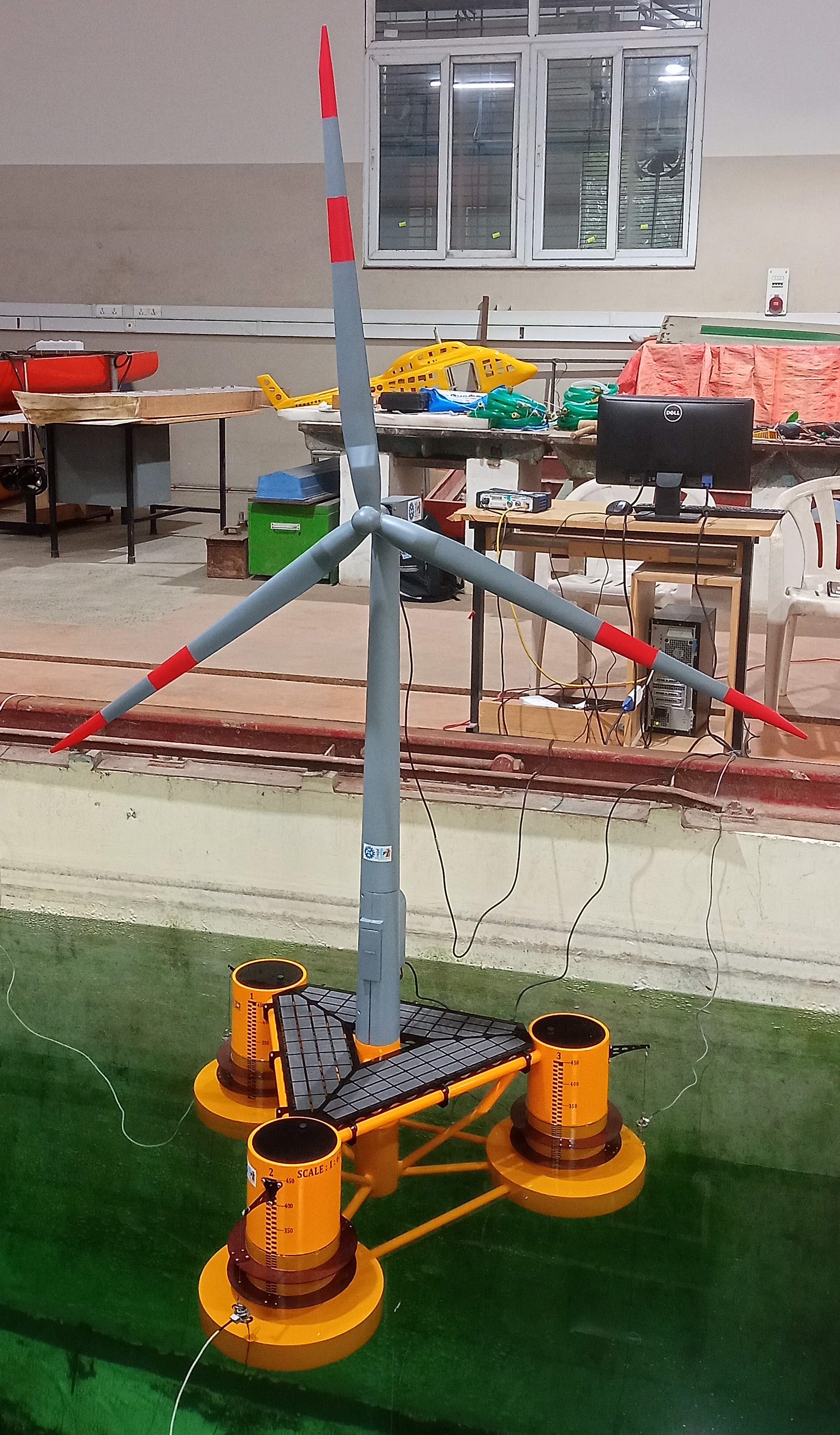
| Value Proposition: | This Floating Platform seamlessly integrates Horizontal Axis Wind Turbine (HAWT) with solar photovoltaic (PV) arrays on a single floating structure, delivering continuous, high-yield renewable energy generation even in deep water environments. It maximizes energy output per ocean footprint, reduces infrastructure and maintenance costs, and ensures energy stability through complementary wind–solar resource utilization. By combining proven offshore wind energy with solar energy harvesting, the platform offers:
|
| Summary Application: | This floating platform integrates horizontal axis wind turbine (HAWT) with floating solar photovoltaic (PV) systems on a single structure to harness both wind and solar energy in marine environments. This hybrid approach is particularly suitable for deep water regions where fixed bottom turbines are impractical. It provides a stable, continuous renewable energy supply by combining the complementary generation profiles of wind and solar resources. Such systems can be applied for large scale offshore renewable power generation, grid connected energy supply, or as independent power sources for offshore industries such as aquaculture, hydrogen production, and desalination. By utilizing shared infrastructure and minimizing seabed disturbance, the hybrid floating platform optimizes ocean space use, reduces overall costs, and supports sustainable energy development in coastal and island regions. |
| Advantages: |
|
| Tech. Readiness Level: |