CSIR Technology Portal

 Technology Profile

Title:

High Strength Fiber Reinforced Concrete 3D Printing Technology for Building Construction

Value Proposition:

This technology offers formwork-free, rapid, and structurally reliable 3D concrete printing for the construction sector. By combining high-strength cementitious matrices with uniformly dispersed fibers, it overcomes the brittleness and weak interlayer bonding of conventional printable mixes. The system reduces construction time by up to 50%, cuts labor requirements significantly, and enables the fabrication of modular, customized building construction time by up to 50%, cuts labor requirements significantly, and enables the fabrication of modular, customized building components. Its superior performance makes it attractive for housing, infrastructure, and disaster relief applications, where speed, accuracy, and structural reliability are critical.

Summary Application:

The HSFRC 3D printing system can be applied to:

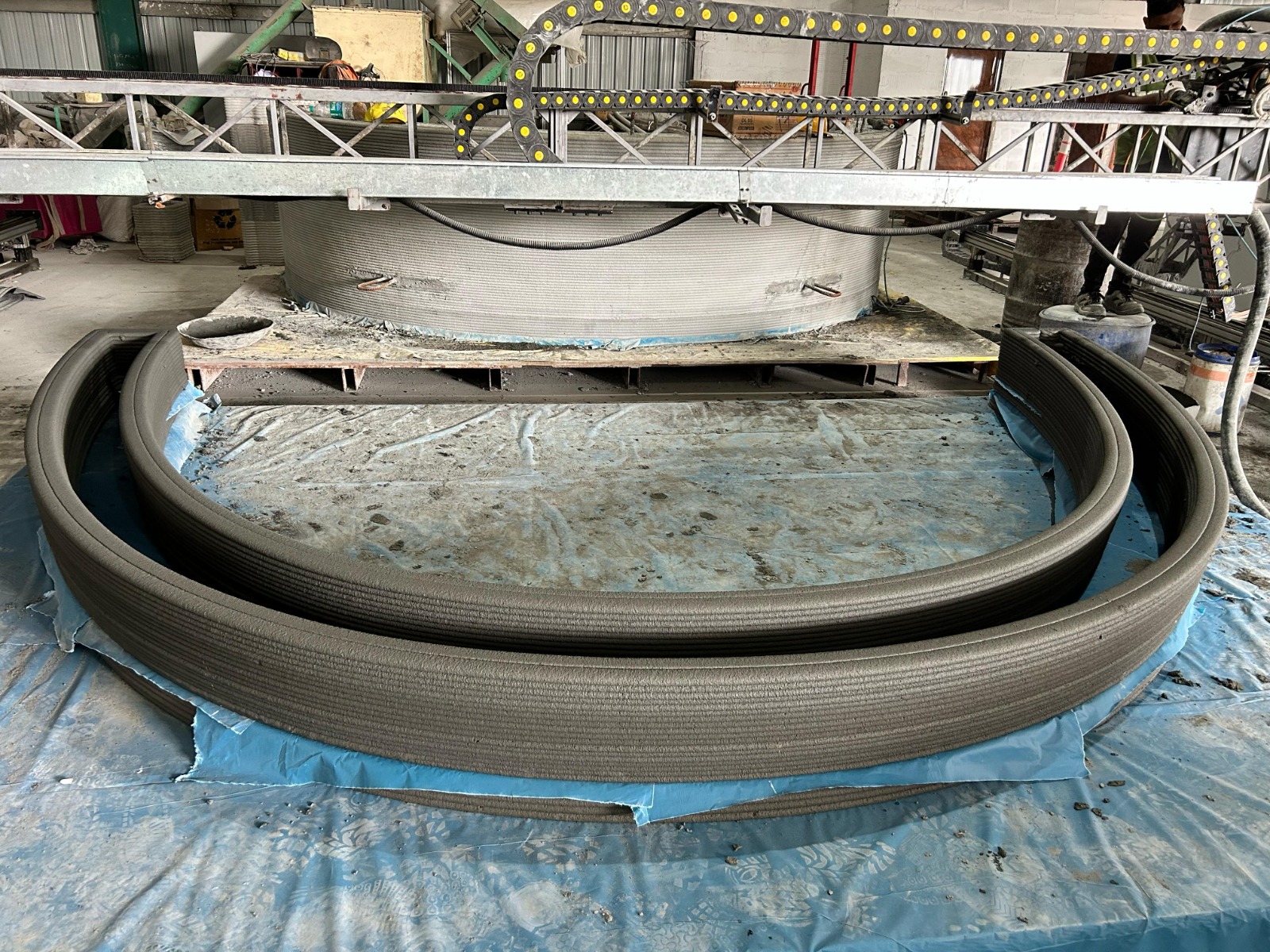
Structural elements: walls, stair cores, slabs, and foundation units.

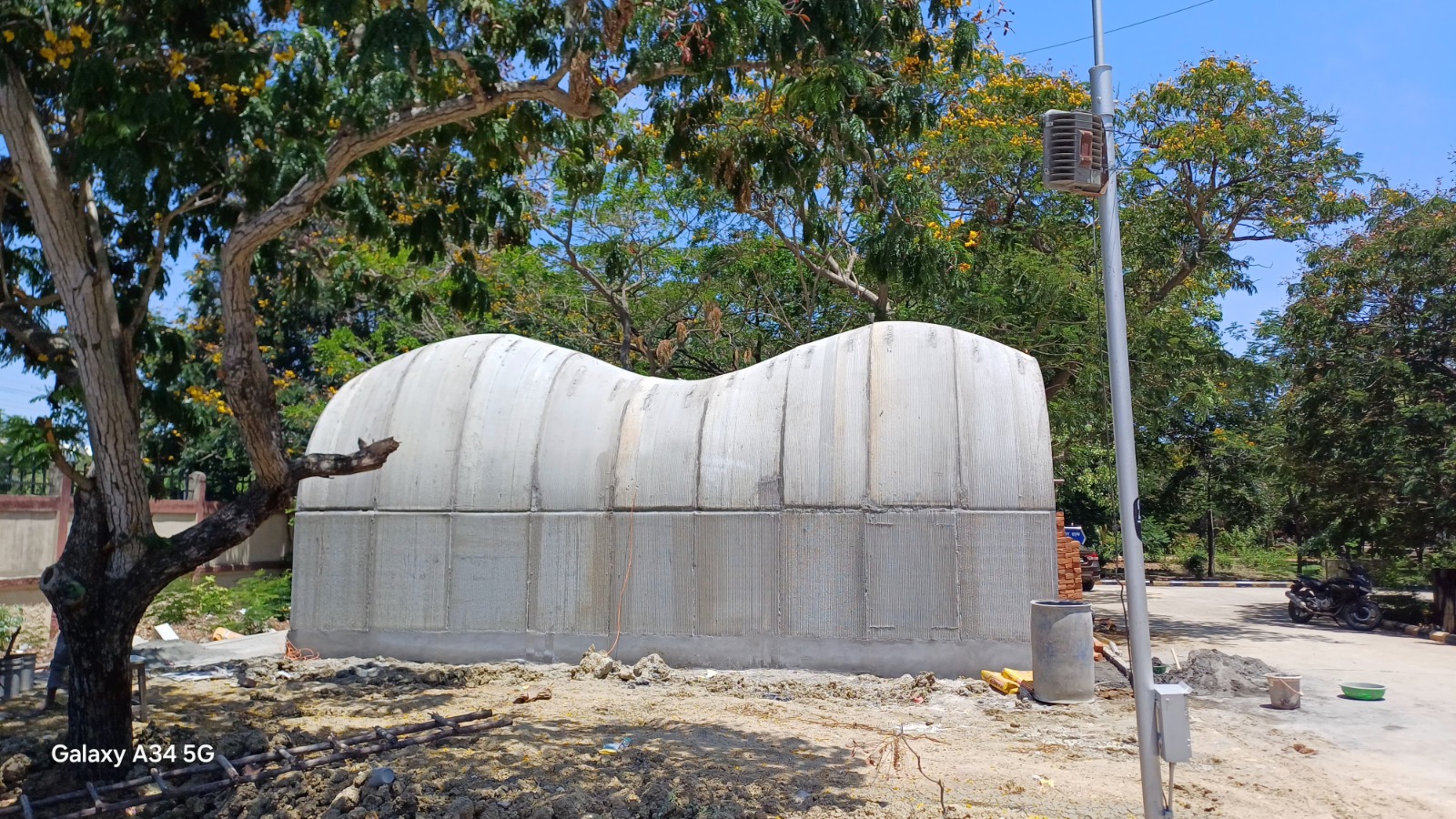
  • Architectural applications: facade panels, customized geometrical features, modular pods.
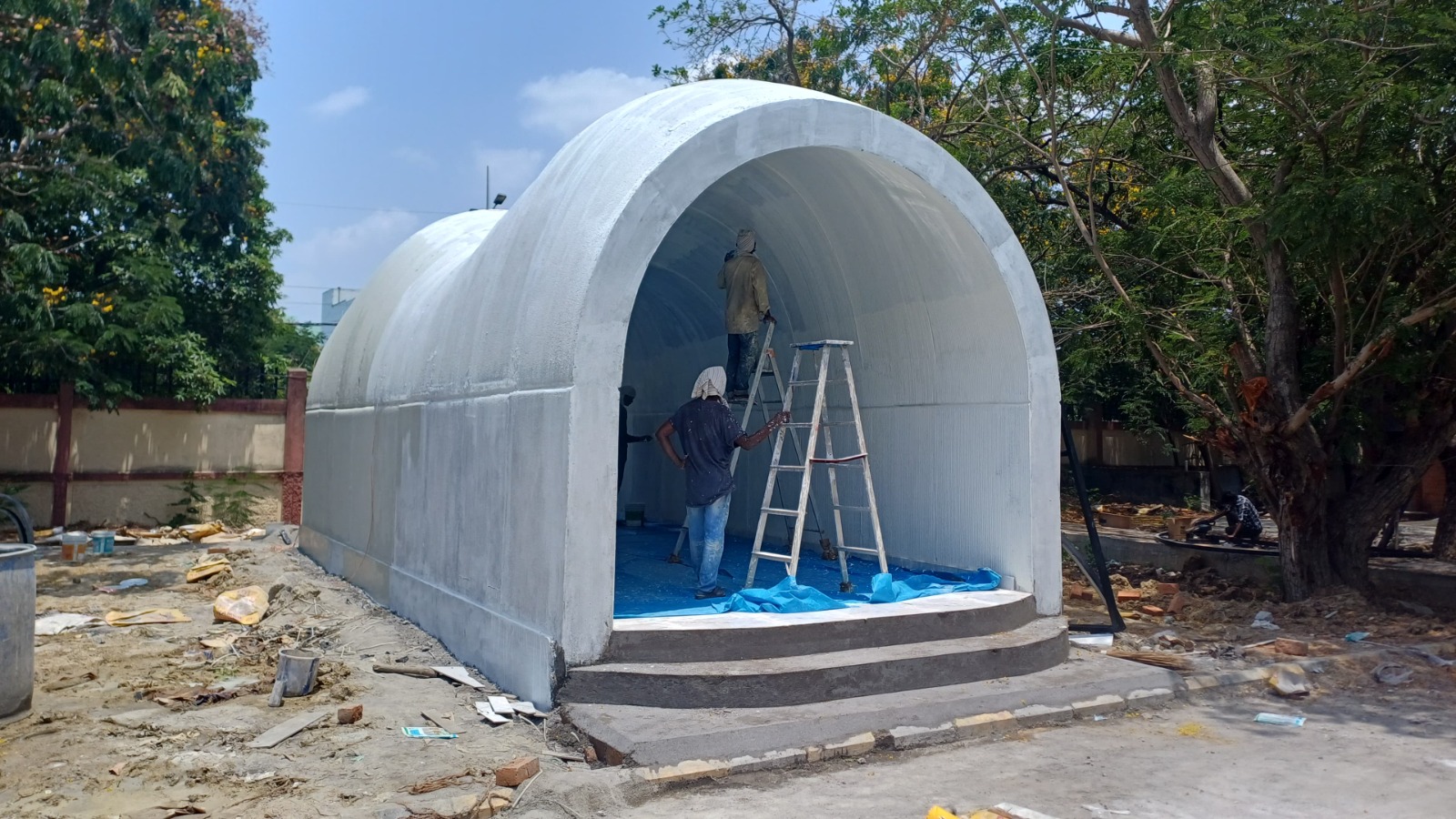
  • Infrastructure: durable precast units, shelters, and site-specific components.

Special use-cases: rapid deployment housing for disaster relief, cost-effective enclosures in remote or resource-constrained regions, and sustainable construction through optimized material usage.

Advantages:
  • The HSFRC mix delivers superior structural performance, achieving compressive strengths exceeding 70 MPa, making it suitable for load-bearing structural components.
  • A key advantage of the system is the incorporation of high-performance fibers, which substantially improve the mechanical behavior of the printed material. The fibers act as micro-reinforcement bridges across cracks, enhancing tensile strength, flexural capacity, and post-cracking ductility.
  • During extrusion, fibers tend to orient along the printing direction, improving load transfer and enhancing resistance to tensile and flexural stresses along the print path.
  • This controlled fiber reinforcement significantly mitigates the inherent brittleness of high-strength cementitious matrices and enhances energy absorption and fracture resistance.
  • Another critical feature of the technology is its optimized interlayer bonding, which ensures strong structural continuity between successive layers and improves mechanical performance compared to many conventional printable materials. The digital fabrication process also enables the creation of complex geometries with high-dimensional accuracy, while optimizing material placement and significantly reducing construction waste.
  • The system is particularly suitable for rapid construction applications, including post-disaster housing, emergency shelters, and resilient infrastructure development.
  • It also supports advanced architectural and urban infrastructure projects requiring customized geometries and efficient material utilization.
  • By integrating fiber-reinforced high-performance materials with digital construction technologies, the HSFRC 3D printing system offers a scalable, durable, and sustainable solution for next-generation construction.
Tech. Readiness Level:
CSIR-Structural Engineering Research Centre
CSIR-Structural Engineering Research Centre[CSIR-SERC]
:  director[at]serc[dot]res[dot]in
:91-44-22542139
:https://serc.res.in
Industrial Applications: Building Materials [Building Materials, Construction Technologies, Furniture etc.]
Photograph(s)