Technology Profile
| Title: | Hydrogen Fuel Cell Electrical Vehicle (FCEV) based on Low Temperature PEM Fuel Cell Technology |
| Value Proposition: | Hydrogen Fuel Cell (HFC) technology uses chemical reactions between hydrogen and oxygen (from air) to generate electrical energy, eliminating the use of fossil fuels and hence net-zero emission is achieved. It works in a similar manner to conventional batteries found in electric vehicles, but they do not run out of charge and don’t need to be recharged with electricity. They continue to produce electricity as long as the supply of hydrogen continued. Under the common vision of human efforts to achieve carbon neutrality, proton exchange membrane fuel cells (PEMFC) possess the potential for large-scale application in future power generation (stationary and automotive) due to zero greenhouse gas emission and high energy efficiency. Last mile connectivity and long distance transportation where EV’s do not work well is the focus sector where hydrogen fuel cell electric vehicles (FCEV) technology can be adopted. The primary advantage of FCEV is that they produce no tailpipe emissions. They only emit water vapour and warm air. Further, quick start-up, high efficiency of fuel cell vehicles and the high energy density of hydrogen ensures that the operational costs in rupees per kilometre for fuel cell trucks and buses are lower than diesel-powered vehicles and this can bring freight revolution to India. Besides, hydrogen produced and consumed in India for transportation applications makes India energy independent from other countries and saves Forex outflow. |
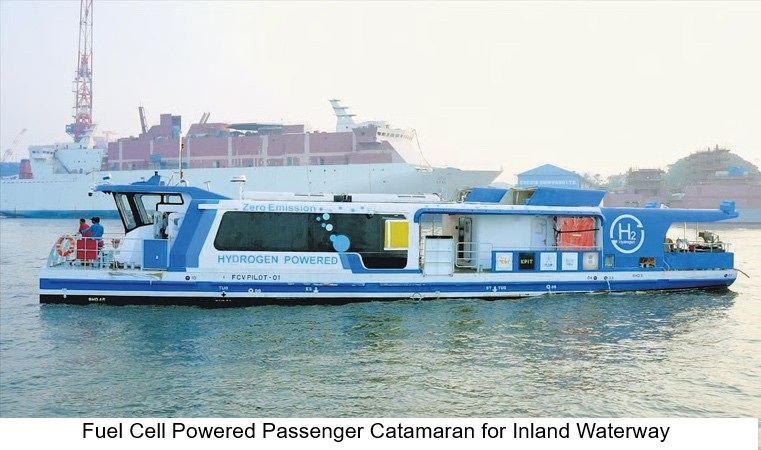
| Summary Application: | Last mile connectivity and long distance transportation, Stationary back power. Commercial Status: India’s first indigenously designed and built Hydrogen Fuel Cell powered passenger Catamaran (zero-emission ship), built and tested by the Cochin Shipyard Ltd in collaboration with multiple partners, was launched on 28 February 2024 in Cochin and commissioned on December 2025 in Varanasi. KPIT Ltd, Pune is among one of the partners built the drive train for the catamaran, including the hydrogen fuel cell technology developed and demonstrated by CSIR-CECRI, CSIR-NCL and KPIT under the CSIR-NMITLI industry originated programme. The know-how and experience in PEM fuel cells technology was developed over several years of combined efforts by CSIR-CECRI and CSIR-NCL, which further have been enhanced and engineered by KPIT who has brought in their expertise in engineering, development of the balance of plant (BoP), system integration, control software and the remaining electric powertrain components, which together enabled running the fuel cell drive train. |
| Advantages: | An indigenous hydrogen fuel cell technology built and suited for Indian environment conditions. |
| Commercialization Status: | Already Commercialised |
| Tech. Readiness Level: |