Technology Profile
| Title: | Peptide-Based Therapeutics Against Parkinson's Disease |
| Value Proposition: | The peptide treatment has shown beneficial effects in mice model of Parkinson's disease. It decreased the α-synuclein aggregate burden in mice brain, and improved locomotory activity. Thus, the peptide has the potential to be First-in-Class therapeutics against Parkinson’s disease. |
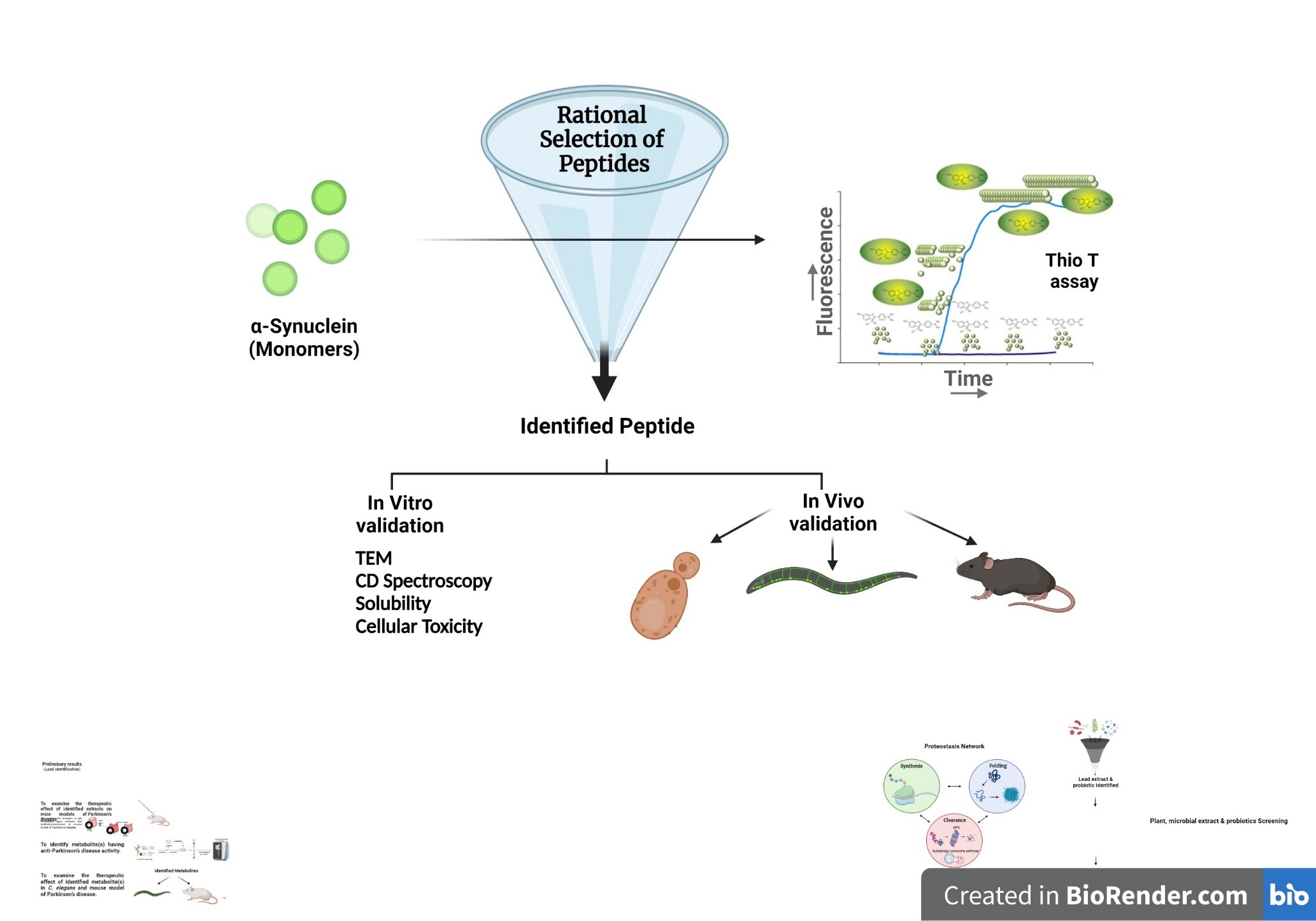
| Summary Application: | Parkinson's disease (PD) is the second most prevalent neurodegenerative disease after Alzheimer's disease. Though multifactorial, the accumulation of α-synuclein amyloid aggregates, known as Lewy bodies, in dopaminergic cells of the substantia nigra region of the brain is a characteristic cellular hallmark of PD. The condition predominantly affects muscle movements, manifesting first with difficulties in chewing and swallowing, drooling, and constipation. The disease progresses with common motor symptoms such as difficulties in movement, tremor, rigidity and posture, etc. As of now, only symptomatic relief is available, and there is no cure. The group recently screened various peptide-based molecules and identified a potent peptide that reduced α-synuclein amyloid aggregation in both in vitro and in vivo models of PD. |
| Advantages: |
|
| Tech. Readiness Level: |