Technology Profile
| Title: | Process Know-How for Manufacturing of Cu-TiO2 |
| Value Proposition: | The developed Cu–TiO₂ coating offers a multifunctional, durable, and low-maintenance surface protection solution for built heritage and modern infrastructure. By synergistically combining the photocatalytic properties of TiO₂ with the antimicrobial activity of copper, the technology enables self-cleaning, air-purifying, and long-lasting microbial resistance under ambient environmental conditions. This coating effectively degrades organic pollutants, inhibits growth of bacteria, fungi, and algae, and reduces surface discoloration, thereby significantly lowering maintenance frequency and lifecycle costs. Its compatibility with protective binders such as Paraloid ensures excellent adhesion, transparency, and preservation of substrate aesthetics, making it particularly suitable for heritage conservation as well as contemporary construction materials. |
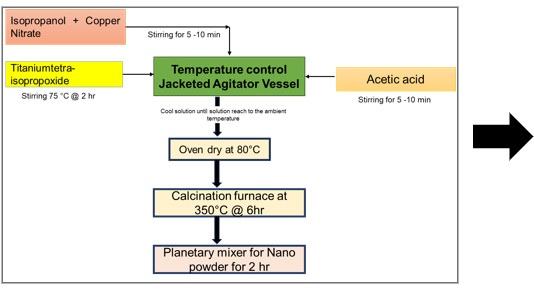
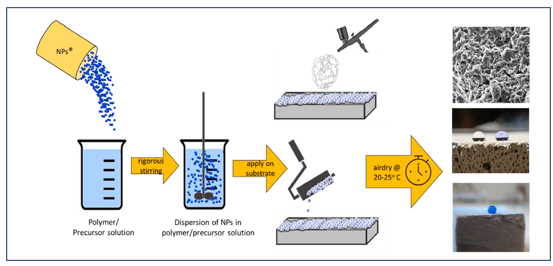
| Summary Application: | This study investigates nano-titania and Cu-doped nano-titania coatings for the protection of marble, sandstone, and granite heritage stones. Nanoparticles synthesized via the sol–gel method were incorporated into a Paraloid B-72 acrylic matrix and characterized using XRD, FESEM, and TEM. The coatings exhibited low wettability, minimal color variation, and strong UV durability, with Cu-doped coatings retaining about 94% hydrophobicity after 144 hours of UV exposure, highlighting their suitability for long-term cultural heritage stone conservation Environmental Factors: Heritage structures deteriorate due to acid rain and biological activities. Material composition: Most historic monuments are made of stone. Impact of Acid Rain: Dissolves lime and marble in stone minerals. Biological Activities: Cause discoloration and blotches on stone surfaces. 70-80% increase in hydrophobicity in coated sample as compared to uncoated sample. Excellent durability with retention in hydrophobicity upto 93% Color variance of coated samples range between 1.2-4.4 which is under acceptable limit of 5. |
| Advantages: | The presence of copper enhances broad-spectrum antimicrobial activity, effectively inhibiting bacteria, fungi, and algae, which is particularly beneficial for heritage structures and public infrastructure. The coating contributes to improved durability and resistance to environmental degradation, including UV exposure and pollution-induced damage. Its application reduces maintenance frequency and associated costs, making it economically attractive over the lifecycle of the structure. Additionally, the coating can aid in air purification by degrading harmful pollutants such as NOx and VOCs, supporting environmental sustainability. With good compatibility with transparent binders, it preserves the original appearance and aesthetic integrity of substrates while delivering advanced functional performance70-80% increase in hydrophobicity in coated sample as compared to uncoated sample. Excellent durability with retention in hydrophobicity upto 93% Color variance of coated samples range between 1.2-4.4 which is under acceptable limit of 5. |
| Commercialization Status: | Licensed awaiting commercialisation |
| Tech. Readiness Level: |

: director[at]cbri[dot]res[dot]in
:91-1332-272243
:https://cbri.res.in