Technology Profile
| Title: | PROTAC Based Technology Targeting degradation of ASK1 Protein as an alternative therapy in NASH |
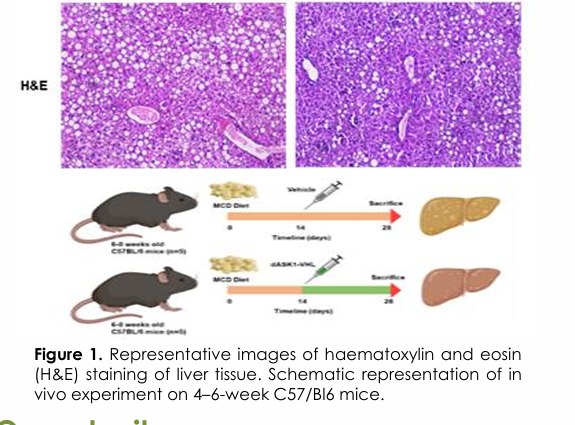
| Value Proposition: | PROTACs are bifunctional molecules that recruit an E3 ubiquitin ligase to a target protein, leading to its ubiquitination and subsequent degradation by the proteasome. By designing PROTACs to specifically target ASK1, it is possible to selectively degrade this protein and reduce its pathological effects in NASH. The lead PROTACs molecules with oral bioavailability, documented target-binding, favourable pharmacokinetics and in vivo efficacy in preclinical rodent pharmacodynamics studies as well as a preclinical disease model of the in NASH. |
| Summary Application: | CSIR-Indian Institute of Chemical Biology is seeking to transfer the technology of PROTAC-based technology offers a novel and targeted approach for degrading ASK1 to a pharmaceutical industry entity (with global footprint and past experience with clinical trials for drugs toward global regulatory approval for human use) for further preclinical development and nomination of clinical candidate/s for evaluation in clinical trials. PROTAC-based technology offers a novel and targeted approach for degrading ASK1, potentially providing a new therapeutic strategy for treating NASH. |
| Advantages: | Challenge/Application domain: ASK1 plays a significant role inmediating inflammation and fibrosis in the liver. In NASH, ASK1 is activated by cellular stress signals, leading to increased inflammatory responses and fibrosis. Persistent activation of ASK1 contributes to liver damage and progression of the disease. ASK1 is a key regulator of oxidative stress responses. In NASH, oxidative stress contributes to liver cell injury and inflammation, exacerbating the disease. Ensuring that PROTACs specifically target ASK1 without affecting other proteins or cellular processes is crucial. Preclinical studies and safety evaluations will be necessary to assess the efficacy and safety of ASK1-targeted PROTACs. |
| Tech. Readiness Level: |

: director[at]iicb[dot]res[dot]in
:91-33-24730492
:https://iicb.res.in/