Technology Profile
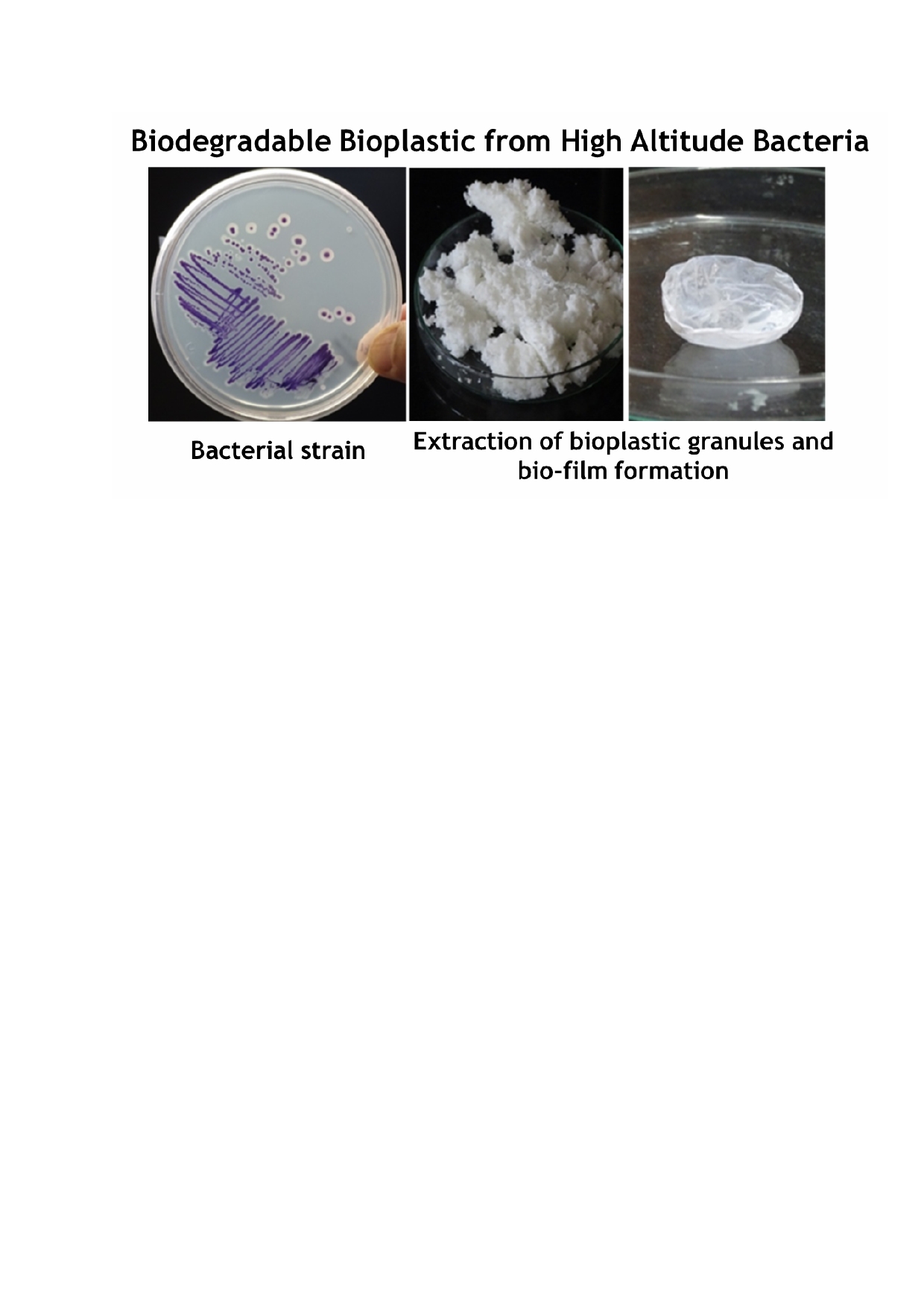
| Title: | Simultaneous Production of Biodegradable Bioplastic Polyhydroxyalkanoates (PHA) and Violacein Pigment from Himalayan Bacteria |
| Value Proposition: | Biodegradable plastics (bioplastics) from microorganisms are important eco-friendly alternative to petroleum based plastics. One of the major class of bioplastics derived from microorganisms are polyhydroxyalkanoates (PHA) with applications ranging from biomedical to commodity plastics and textile industries. PHAs are an important substrate for green economy and potential solution to plastics pollution. The global demand for bioplastics is ever increasing with a market value as of 2021 is USD 93.5 million and estimated to grow at 4.9% annually. |
| Summary Application: | Considering the importance of the bioplastics, CSIR-IHBT has identified a unique Himalayan bacterium isolate PCH194 capable of synthesizing PHAs up to 70% of its dry cell weight. In addition, the bacterium simultaneously produces pigment violacein that finds application in textile, cosmetics and pharma industries. Violacein has been attributed with antioxidant, antitumoural, antibacterial, antiviral, and antiprotozoal activities. |
| Advantages: | CSIR-IHBT has developed a bioprocess for lab scale production and extraction of bioplastic and violacein pigment and aim to develop bioplastic blends for commodity applications in packaging, carry bags and coating applications. The salient features of the process are 1.Niche specific novel Himalayan bacterium isolate. 2.Produces bioplastic up to 70% of its dry cell weight. 3.Uses simple sugars as source of carbon. 4.Simultaneous production of bioplastic and valuable violacein pigment. |
| Tech. Readiness Level: |

: director[at]ihbt[dot]res[dot]in
:91-1894-230411
:https://www.ihbt.res.in