Technology Profile
| Title: | Small Molecule Modulators of COP1-ATGL axis. |
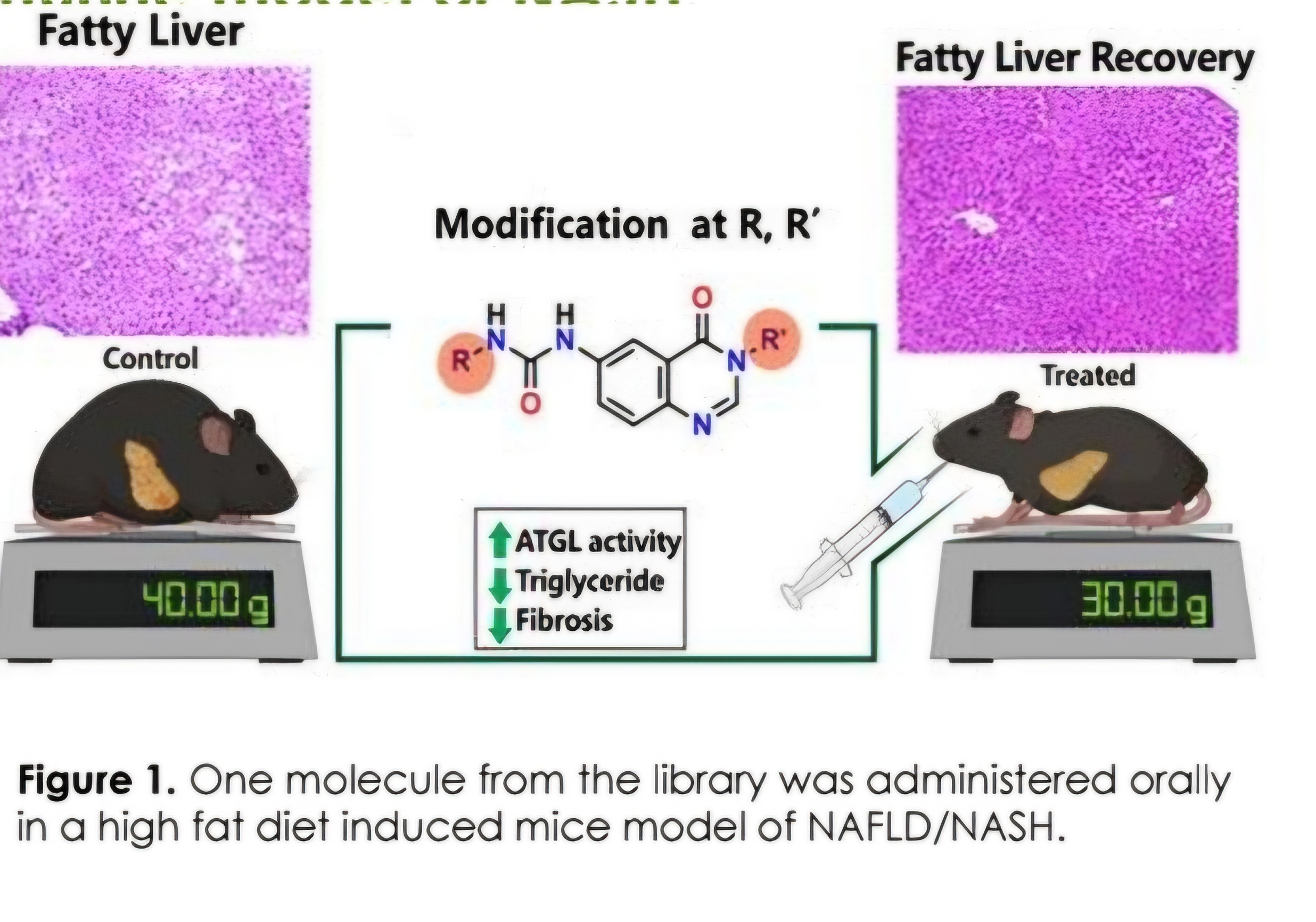
| Value Proposition: | The present invention relates to a lead series of small molecule modulators based on quinazoline and quinazolinedione scaffold against COP1-ATGL axis developed through rational design driven by well characterized SAR in HepG2 cells and primary hepatocytes3,4. The lead series includes molecules with documented target- engagement, favourable ADME profile, diminishing the lipid content from liver and preclinical disease model of the NAFLD. A series of novel and potent modulators of E3-Ligase COP1 was identified which blocks the ATGL ubiquitination and degradation by Ubiquitin Proteasomal System. The small molecule modulators effectively halted lipid accumulation in liver in preclinical high fat diet induced murine model of NASH. ●Potent modulators of COP1-ATGL axis. ●Demonstrated efficacy in HepG2, primary hepatocytes. ● Demonstrated efficacy in a preclinical model of NASH. |
| Summary Application: | Application domain :E3 ubiquitin ligase, Constitutive Photomorphogenic 1 (COP1) regulates turnover of Adipose Triglyceride Lipase (ATGL), the rate-limiting lipolytic enzyme1 Genetic perturbation in the COP1-ATGL axis disrupts lipid homeostasis, leading to liver steatosis. At present, treatment strategies are mainly directed toward various targets that mediate hepatocyte dysregulation, inflammation, apoptosis, and oxidative stress.Many potent small molecules are in Phase II clinical trials that target mainly the steatotic stage. Targeting the fibrotic stage in NASH may not always prove to be beneficial since mostly the stage is irreversible and much damage has already been inflicted on the liver. There are no reported COP1 modulators till date. COP1 is established as an important therapeutic target in the context of fatty liver disease. |
| Advantages: | The small molecule modulators effectively halted lipid accumulation in liver in preclinical high fat diet induced murine model of NASH. |
| Tech. Readiness Level: |